

What Size Battery Do I Need? What UK Homes Actually Chose
A home battery doesn't need to hold your whole day's electricity. Here is what 382 Spark customers who showed us an electricity bill chose in 2026, grouped by how much electricity they use, and a simple rule of thumb you can apply to your own bill.
On this page
- 10 kWh is the usual choice. It was the typical battery for homes using 3,000 to 9,000 kWh of electricity a year.
- Lower users mostly chose 5 kWh. 66% of homes using under 3,000 kWh a year went for 5 kWh.
- The biggest users went bigger. 62% of homes using 9,000 kWh or more chose 15 kWh or more.
- A rule of thumb: half of homes chose a battery that holds between about half and all of an average day's use. The typical home chose one holding about 73%.
The Short Answer
Start with your annual electricity use, which is on your bill or in your supplier's app. Divide it by 365 to get your average daily use, then look for a battery that holds about half to all of that.
For example, a home using 4,000 kWh a year uses about 11 kWh a day. Half to all of that is roughly 5.5 to 11 kWh, so a 10 kWh battery fits, and that is what most homes with that level of use chose. The table below shows what homes like yours picked.
This is a starting point, not a formula. Your roof, your budget, your tariff and any plans for an electric car or heat pump all change the answer, and your quote is sized to your home. Our sizing guide covers how many panels go with each level of use.
What Homes Like Yours Chose
This is every Spark solar and battery order signed in 2026 where the customer showed us a bill, 382 homes, grouped by annual electricity use.
| Annual electricity use | Homes | 5 kWh | 8–10 kWh | 15–16 kWh | 20 kWh+ | Typical battery |
|---|---|---|---|---|---|---|
| Under 3,000 kWh | 73 | 66% | 29% | 4% | 1% | 5 kWh |
| 3,000–4,499 kWh | 123 | 33% | 56% | 9% | 2% | 10 kWh |
| 4,500–5,999 kWh | 82 | 20% | 62% | 13% | 5% | 10 kWh |
| 6,000–8,999 kWh | 56 | 30% | 46% | 18% | 5% | 10 kWh |
| 9,000 kWh and over | 48 | 4% | 33% | 29% | 33% | 15 kWh |
Share of homes in each group choosing each battery size. Rows may not add to 100% because of rounding. "Typical" is the median.
The pattern is clear at both ends. Two-thirds of the lowest users chose 5 kWh, while most of the highest users chose 15 kWh or more. In between, from 3,000 to 9,000 kWh a year, 10 kWh was the most common choice, picked by 46% to 62% of homes in each group.
A Rule of Thumb You Can Use
We compared each home's battery with its average daily use. The typical home chose a battery holding 73% of a day's use, and half of homes were between 52% and 101%.
| Annual electricity use | Typical daily use | Typical battery | Battery as a share of a day's use |
|---|---|---|---|
| Under 3,000 kWh | 6.5 kWh | 5 kWh | 101% |
| 3,000–4,499 kWh | 10 kWh | 10 kWh | 94% |
| 4,500–5,999 kWh | 13.7 kWh | 10 kWh | 73% |
| 6,000–8,999 kWh | 19.6 kWh | 10 kWh | 52% |
| 9,000 kWh and over | 31.4 kWh | 15 kWh | 40% |
Medians for each group. Daily use is annual use divided by 365, so it is an average across the year. The share is worked out home by home, so it is not simply the typical battery divided by the typical daily use.
Lower users tended to choose a battery that could hold close to a full day's use. Higher users more often chose one that covers only part of the day. That fits the usual advice: a battery earns its keep by filling and emptying most days, so it's sized to the hours when your panels aren't generating rather than to your whole day.
If you use a lot of electricity overnight, for example to charge a car, or you want to charge the battery on a cheap overnight rate, a bigger battery can make sense. Our guide to tariffs for battery owners explains how that works.
How Choices Changed Through 2026
Homes chose bigger batteries in the second half of the year. Among homes that showed us a bill, 12% chose 15 kWh or more from January to June. From July to 24 November it was 27%.
| Annual electricity use | Homes, Jan–Jun | 15 kWh+, Jan–Jun | Homes, Jul–Nov | 15 kWh+, Jul–Nov |
|---|---|---|---|---|
| Under 3,000 kWh | 37 | 3% | 36 | 8% |
| 3,000–4,499 kWh | 53 | 4% | 70 | 17% |
| 4,500–5,999 kWh | 32 | 6% | 50 | 26% |
| 6,000 kWh and over | 51 | 29% | 53 | 53% |
Share of homes in each group choosing a battery of 15 kWh or more.
The shift was biggest among the highest users: 53% of homes using 6,000 kWh or more chose 15 kWh or more from July, against 29% before. Homes using 3,000 to 4,499 kWh moved too, with the typical battery going from 5 kWh to 10 kWh. The data shows what changed, not why. Our monthly install data tracks battery and inverter sizes across all Spark orders, month by month.
Why 5 kWh and 8 kWh Modules Matter
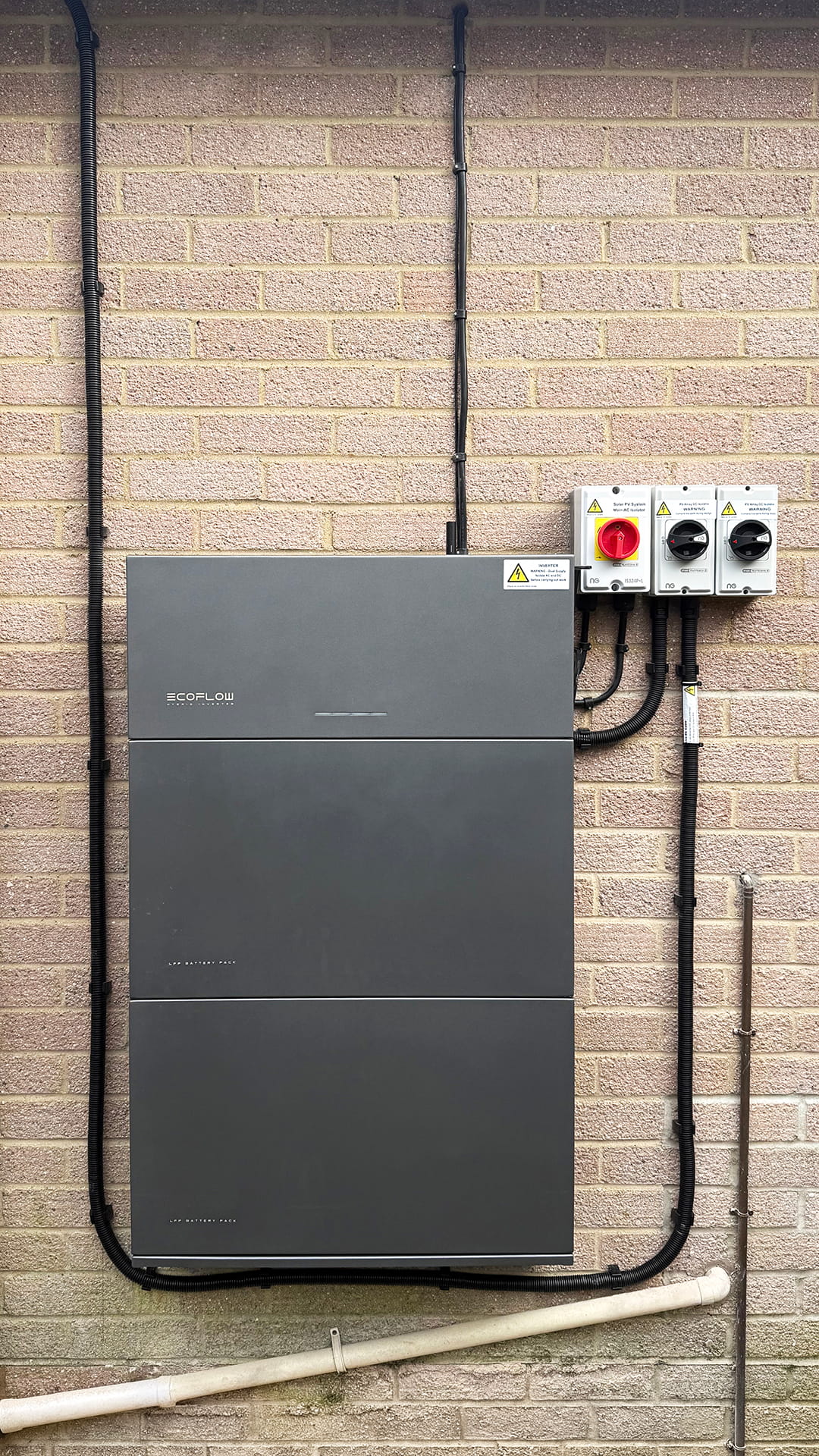
We fit the EcoFlow OCEAN 2, which is built from stackable battery modules. The size of each module decides the steps you can choose between.
Until October 2026, every battery in our 2026 orders was built from 5 kWh modules, so homes chose 5, 10, 15, 20 kWh or more. EcoFlow added an 8 kWh module, which it rates at 8.03 kWh with 7.76 kWh usable, and says it can be combined with the 5 kWh modules (EcoFlow announcement, October 2026). It first appeared in our orders in October, and 14 homes have chosen it since, 11% of orders from 1 October.
Two 8 kWh modules give 16 kWh, which takes fewer modules than 15 kWh from three 5 kWh modules. Because the battery is modular, you can also start smaller and add modules later, for example when you get an electric car. As with any battery, the usable capacity is a little below the headline figure. More on the system itself on our EcoFlow OCEAN 2 page.
What Else Changes the Answer
Your electricity use is the best single guide, but it isn't the only one.
- An electric car or heat pump. Future use matters more than last year's bill. Tell us what you're planning.
- Your tariff. A time-of-use tariff can make a bigger battery worthwhile, because it can charge cheaply overnight as well as from your panels.
- Your roof. A battery stores what your panels make, so a small roof can limit how much of a large battery your panels fill.
- Backup power. A battery on its own doesn't keep the lights on in a power cut. Backup is included only where it's agreed in your order; see our battery storage page.
- Cost. For the same number of panels, a 10 kWh battery instead of 5 kWh added roughly £800 to £1,600 to the price of a Spark system. Our cost guide sets out what homes paid.
Already have panels? A battery can be added to an existing system, or fitted without solar. Our battery storage guide explains how a home battery works and what to compare.
How We Worked Out These Figures
These figures come from SparkOS, our own sales system.
They cover Spark solar and battery orders signed between 1 January and 24 November 2026, by signing date, leaving out cancelled orders and those where finance was declined: 571 orders. The tables use only the 382 homes whose annual electricity use came from a bill. The other 189 homes, whose use we estimated, chose similar batteries (typical 10 kWh, average 10.1 kWh). Battery size is the total storage ordered, module size times the number of modules, using the modules' rated size. "Typical" is the median, and "half of homes" is the range between the 25th and 75th percentiles. Every group shown has at least 12 homes. The figures are as at 24 November 2026.
Your Questions, Answered.
What size solar battery do I need?
Divide your annual electricity use by 365 and look for a battery that holds about half to all of that daily figure. In 2026, half of Spark homes chose a battery in that range, and 10 kWh was the usual choice for homes using 3,000 to 9,000 kWh a year.
How many kWh battery do I need for a 3-bedroom house?
It depends on your electricity use more than the number of bedrooms. The typical Spark customer who showed us a bill used about 4,400 kWh a year, and most homes using 3,000 to 6,000 kWh chose a 10 kWh battery.
Is a 5 kWh battery big enough?
For lower users it often is. 66% of Spark homes using under 3,000 kWh a year chose 5 kWh, which held about a full day of their average use.
When does a battery of 15 kWh or more make sense?
With high electricity use, an electric car, a heat pump or a time-of-use tariff. 62% of Spark homes using 9,000 kWh or more a year chose 15 kWh or more.
Can I add more battery later?
Yes. The EcoFlow OCEAN 2 we fit is modular, so you can add modules later, for example when you get an electric car.
Get a Battery Sized to Your Home
A free, no-obligation quote with EPVS-validated savings, sized around your bill and your evenings.
Get My Free Quote