

Battery Storage Without Solar Panels (and Adding a Battery to Existing Solar)
You don't need solar panels to save with a home battery. It can charge on cheap overnight electricity and power your home through the expensive hours. A battery can also be added to panels you already have. Here's how both work, what they save and the rules to know.
On this page
- A battery on its own saves money by charging when electricity is cheap and powering your home when it's expensive. You need a time-of-use tariff for this to work.
- In our illustration, moving 5 kWh a day from today's capped price to an 8p off-peak rate saves about £318 a year. The gap between your peak and off-peak rates decides the saving.
- Batteries are zero-rated for VAT until 31 March 2027, whether they're fitted with solar, added to existing panels or installed on their own.
- Adding a battery to existing solar doesn't stop your Feed-in Tariff, as long as the metering is set up correctly and you tell your FiT supplier.
How a Battery Saves Money Without Solar
A home battery stores electricity and releases it later. Without panels, it fills up from the grid.
On a time-of-use tariff, electricity is much cheaper at certain times, usually overnight, and dearer at others, usually late afternoon and evening. The battery charges in the cheap window and your home runs from it through the expensive hours, so you buy less at the higher price.
The Energy Saving Trust describes this as one of the main ways a battery can be used, alongside storing solar (Energy Saving Trust, battery storage). It also says savings from a battery alone won't always be enough to justify the cost, so it's worth doing the sums for your home first.
What Could It Save?
The saving depends on two things: how much electricity you move from peak to off-peak, and the gap between the two prices.
| Electricity moved | Off-peak rate | Rough saving a year |
|---|---|---|
| 5 kWh a day | 8p per kWh | £318 |
| 5 kWh a day | 15p per kWh | £176 |
| 10 kWh a day | 8p per kWh | £636 |
| 10 kWh a day | 15p per kWh | £352 |
Illustrative only. Compares buying at 26.32p per kWh, the Ofgem price cap average unit rate for 1 October to 31 December 2026, with charging at the off-peak rate shown, and allows for about 10% lost charging and discharging the battery. Real tariffs, standing charges and how you use electricity will change the result.
For scale, Ofgem's typical medium home uses 2,500 kWh of electricity a year, about 7 kWh a day, and not all of it falls in peak hours. Homes that use more, for example with an electric car, an electric shower or a heat pump, can move more and save more. A household that uses little electricity in the evening will save less.
You Need the Right Tariff
A battery without solar only pays off on a tariff with a cheap window. On a single flat rate there's nothing to gain from shifting.
Check the tariff's rules before you commit, because some aren't open to battery-only homes. Octopus Flux, for example, needs solar panels as well as a battery. Others are sold with a particular battery. Our guide to tariffs for battery owners compares the main types.
Adding a Battery to Existing Solar Panels
If you already have panels, a battery lets you keep more of your own solar for the evening instead of exporting it.
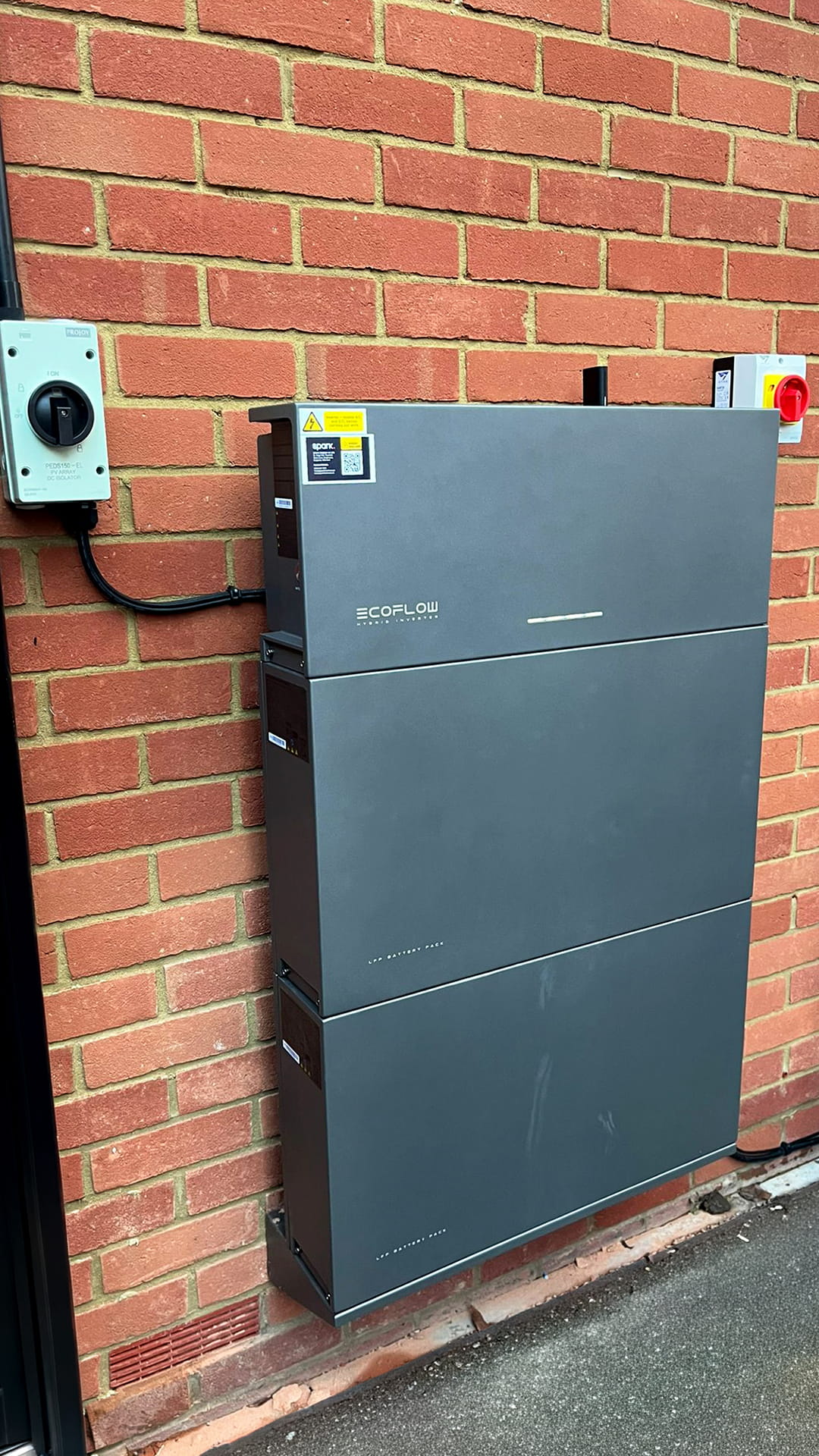
There are two common ways to do it. An AC-coupled battery has its own inverter and sits alongside your existing solar inverter, so the panels and their wiring stay as they are. Alternatively, your solar inverter can be replaced with a hybrid inverter that runs both the panels and the battery, which can make sense if your old inverter is near the end of its life. We check your existing system at the survey and recommend the option that suits it.
Panels fitted by another company aren't a problem. We'll ask for your MCS certificate and inverter details if you have them.
Will It Affect My Feed-in Tariff?
No, if it's set up correctly. Ofgem's guidance lets you add a battery to a Feed-in Tariff (FiT) system and keep your payments.
- Your generation meter must only measure what the panels produce, not electricity that has gone in and out of the battery.
- If the battery can charge from the grid, the generation meter has to sit between the panels and the battery, or the setup has to stop the battery importing from the grid.
- You should tell your FiT supplier about the change. Ofgem provides declaration templates for this.
- Some energy is lost going in and out of a battery, which can slightly reduce the generation your meter records.
Source: Ofgem, guidance for generators on co-locating storage with FIT installations (v6.2, May 2025). We design the wiring and metering with this in mind.
VAT, Paperwork and Safety
Three things are handled as part of the installation.
- VAT. Batteries are zero-rated until 31 March 2027, including retrofits to existing solar and standalone batteries that charge from the grid (HMRC VAT Notice 708/6, section 2.19). After that date the rate is due to be 5%.
- Network operator. Your local network operator has to be told about a battery, and larger systems need approval before they're connected. We handle this for you.
- Standards. We're MCS-certified and fit batteries to the MCS battery installation standard, with a certificate at handover.
Battery-Only Installs With Spark
We fit batteries on their own and add them to existing solar systems, including panels fitted by other companies.
Your quote sets out the battery, the inverter, the capacity and any backup power, which is included only where it's agreed in your order. If you're thinking of adding panels later, tell us at the survey so the battery and inverter can take them. For a system with new panels too, our solar battery guide and cost guide show what homes paid.
Your Questions, Answered.
Can you have a home battery without solar panels?
Yes. A battery can charge from the grid when electricity is cheap, usually overnight on a time-of-use tariff, and power your home when prices are higher.
Is a battery worth it without solar?
It can be if you use a fair amount of electricity at peak times and can get a tariff with a big gap between off-peak and peak prices. In our illustration, moving 5 to 10 kWh a day saves roughly £176 to £636 a year. On a flat-rate tariff there's little to gain.
Can I add a battery to my existing solar panels?
Yes. Most systems can take an AC-coupled battery alongside the existing inverter, or a hybrid inverter that runs both. Panels fitted by another company aren't a problem.
Will adding a battery affect my Feed-in Tariff?
Not if it's set up correctly. Ofgem's guidance says the generation meter must only record what the panels produce, and you should tell your FiT supplier about the change.
Is there VAT on a battery fitted on its own?
Not until 31 March 2027. Batteries are zero-rated whether they're fitted with solar, added to existing panels or installed on their own. The rate is due to go to 5% after that.
Get a Quote for a Home Battery
A free, no-obligation quote for a battery on its own or added to your existing panels.
Get My Free Quote