

Is My Roof Suitable for Solar Panels?
Most UK homes are well suited to solar — but a few things make a difference to how much you'll generate. Here's what surveyors actually look at, and why direction matters less than people think.
On this page
- Most UK roofs are suitable for solar.
- South is best, but east/west roofs still perform very well.
- Some shading is manageable with modern panel-level electronics.
- Tile, slate and flat roofs can all be fitted.
Direction and Pitch
South-facing roofs generate the most over a year, but this matters far less than people assume. East and west-facing roofs still perform very well — often 80–90% of a south-facing roof — and they spread generation across morning and evening, which can actually suit your usage better. A pitch of roughly 30–40 degrees is ideal, but a wide range works well.
Shading
Shade from chimneys, trees, aerials or neighbouring buildings reduces output, but it rarely rules solar out. Modern systems use panel-level electronics (optimisers or microinverters) so a shaded panel doesn't drag down the rest, and a good designer arranges the layout to avoid the worst-affected areas. Our survey assesses shading across the day and seasons.
Roof Type and Condition
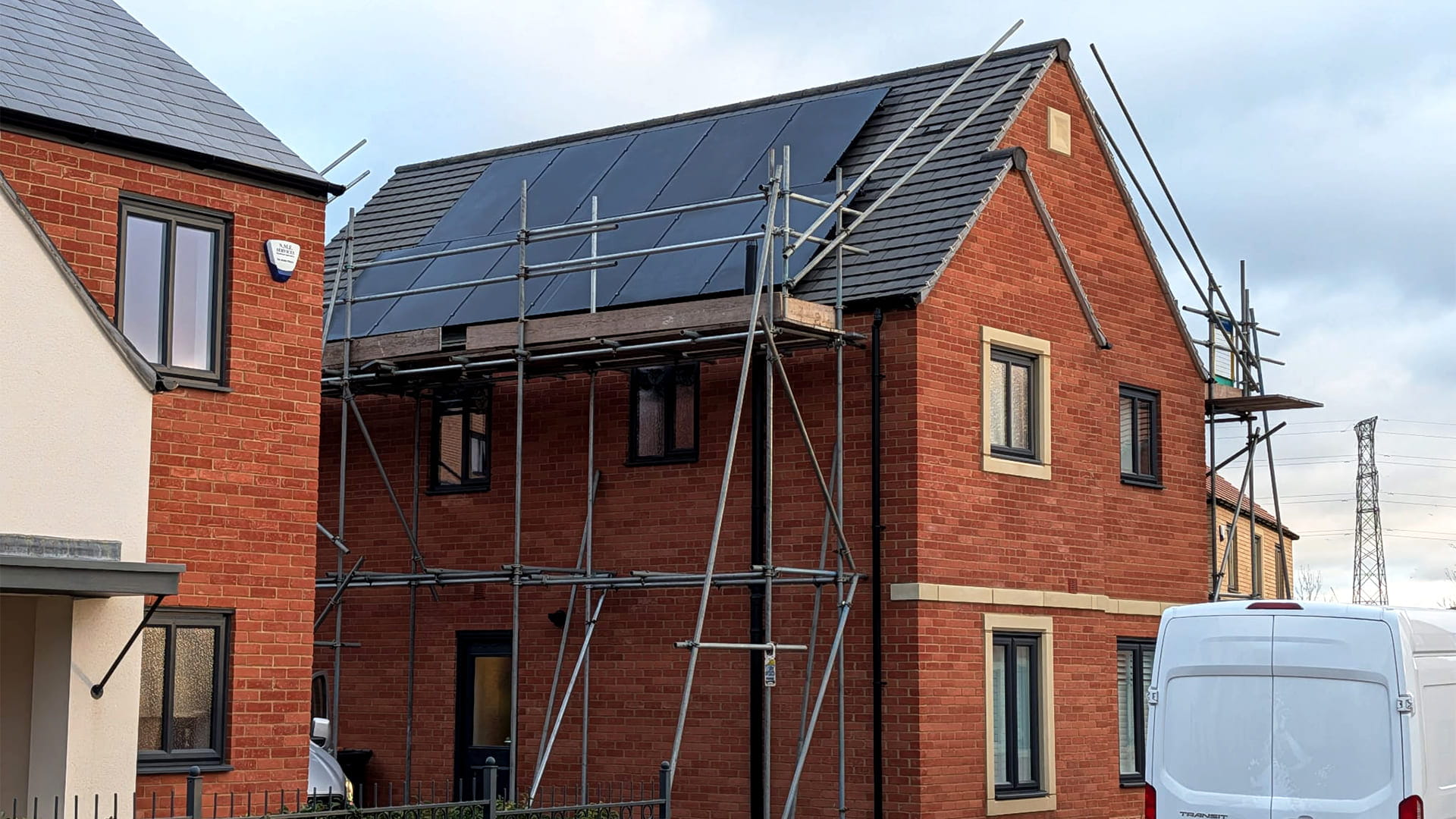
Almost every roof type is suitable — tile, slate and flat roofs are all routinely fitted with solar, each with the right mounting method. The main thing surveyors check is condition: your roof should be sound enough to carry panels for decades. If it needs minor work first, we'll flag it. Panels are lightweight and don't typically need structural changes on a healthy roof.
Space and System Size
The more usable roof area you have, the larger the system you can fit — but you don't need a huge roof to benefit. A typical home system uses around 9–16 panels, and even a modest roof can deliver meaningful savings. Where roof space is limited, premium high-output panels (which we fit as standard) generate more from each panel, making the most of what you have.
Your Questions, Answered.
Which roof direction is best for solar panels?
South-facing generates the most, but east and west-facing roofs still perform very well and spread generation across the day, so most orientations are suitable.
Do solar panels work on a north-facing roof?
North-facing slopes generate less and are usually avoided, but many homes have other roof faces that work well. A survey finds the best layout for your roof.
Does shading stop me getting solar?
Some shading is manageable. Panel-level electronics and careful layout reduce its impact, and we design around chimneys, trees and nearby buildings.
What types of roof can have solar panels?
Most roof types are suitable, including tile, slate and flat roofs. Our surveyors confirm your roof's condition and the right mounting method.
Find out What Your Roof Can Do
Book a free, no-obligation survey and we'll confirm your roof's potential and your savings.
Get My Free Quote